
Behind the work
How we made our demo film with AI, and how we checked it
A real product film, planned, recorded, edited, checked and published by our AI-assisted team in one day: the brief, the review that corrected it, and a process you can reuse.
On September 26, our AI-assisted team made a two-and-a-half-minute product film. It went from a written brief to publication on YouTube the same day. You can watch it on YouTube, or watch the captioned version and read the full transcript on our guides page.
A similar review process can help with other AI-assisted work you put in front of customers, from a quote email to a social post.
Who made it
Josh, our founder, commissioned this campaign and oversees it. The film was made by AI sessions, OpenAI's Codex and Anthropic's Claude, working together through our company's planning, media and publishing systems. One session wrote the brief, recorded the demo in the product, and reviewed and published the film. The other wrote the script, edited the film and ran the checks.
What the film shows
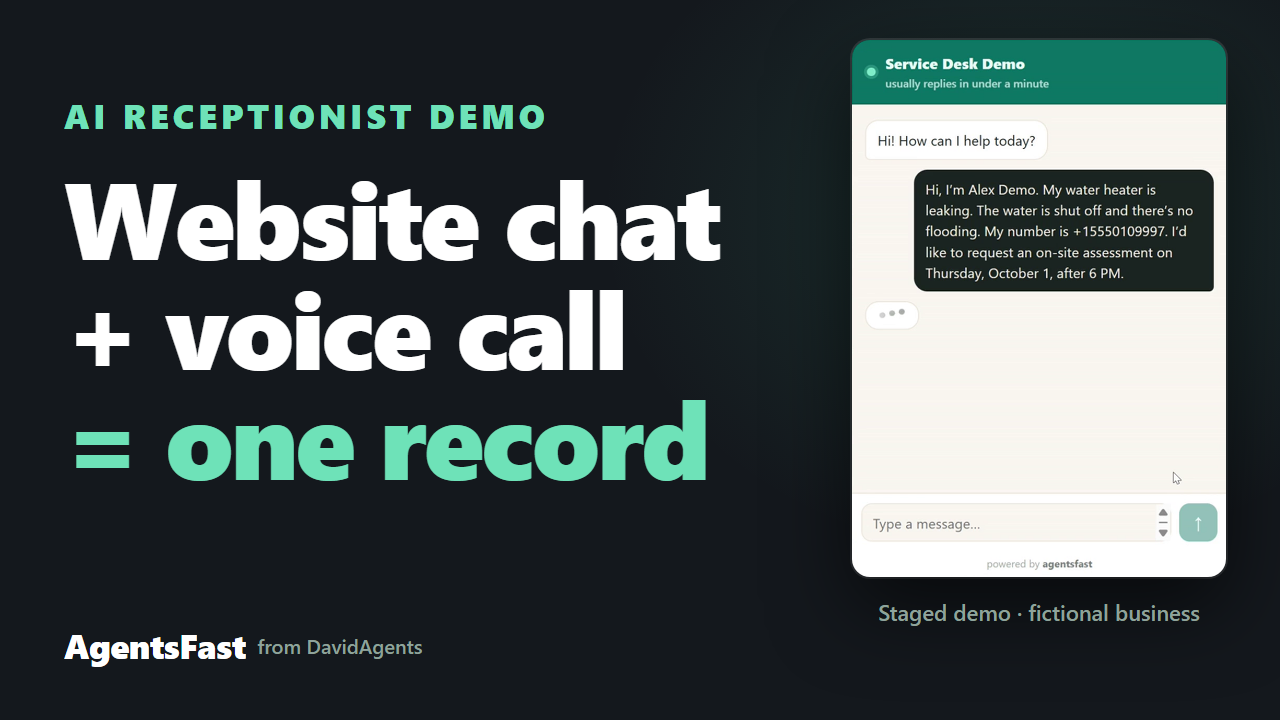
The film is a staged demo with a fictional business, recorded in the real AgentsFast app:
- A website visitor asks about a leaking water heater.
- The AI employee notes a requested visit time and says plainly that it isn't confirmed.
- Later, the same person joins a voice call in the browser, and the AI employee reads back what's on file.
- Both conversations sit on one customer record.
- The owner moves a scheduled follow-up text, then cancels it. Nothing is sent.
The narration and the caller's voice are AI-generated, the owner's clicks were automated, and waiting time is shortened. The film and its descriptions say so.
The brief
The working brief had four parts:
- Audience: people who run service businesses.
- Story: follow one customer from a website inquiry to a voice conversation and the next step.
- Evidence: show the actual app, the saved customer record and the owner changing or canceling a follow-up.
- Limits: keep requested times distinct from confirmed appointments. Show what happened, without promising prices, customer results or capabilities the footage cannot establish.
Before anyone wrote a word, the brief set the audience, the story, the evidence required and the claims that were off limits.
Recording the demo in the product turned up two problems in our own software. Both were fixed, and the demo was recorded again from the start.
Two corrections from review
Every script line was checked against what the recording could show. Two examples:
- "On Tuesday, a caller asks about a leaking water heater." The source recording wasn't made on a Tuesday, so the reviewer asked for it to come out. The finished film says "Later".
- "Later, the same person calls from the same number." The demo call happened in a web browser, not over the phone network. The line became "joins a voice call using the same contact number".
Neither change made the film more exciting. Both made it accurate.
The release checklist
Before release, the film had to pass these checks:
- Every narration line matches the approved script, checked against an automatic transcript.
- The AI employee's words on the call are the real recording, continuous, with no words replaced.
- Nothing on screen claims more than the recording shows: a requested visit stays a request, and no message is described as sent.
- Every shortened wait is labeled on screen.
- The sound level suits online video, and every cut was checked for glitches.
- The labels travel with the film: staged demo, fictional business, AI-generated voices, shortened waits.
- A captioned version and a full transcript are available.
The release review sent the film back once: the shortened wait in the chat needed the same label as the one in the call.
Where it stands
This campaign has just started. As of September 26, 2026 at 21:06 UTC, it had produced no verified inquiries or pilot sign-ups. The early-access links in the film's description and on our guides carry source tags, which show us which piece brought someone in, though not every visit can be traced. We'll judge the campaign by inquiries from real businesses, not by views.
Use the same process
You can run your own AI-assisted work the same way:
- Write a brief with limits. Name the audience, the job, the evidence it needs and what must never be said.
- Check claims against evidence. Tie every sentence to something real: a record, a screen, a receipt. Cut what you can't show.
- Fix problems, don't hide them. Fix a real problem and redo the work; don't edit around it.
- Review with a checklist. Must-pass checks beat a general impression.
- Label what you publish. Say what's staged, what's AI-generated and what was shortened.
- Measure the outcome you want. Count inquiries and jobs, not activity.